
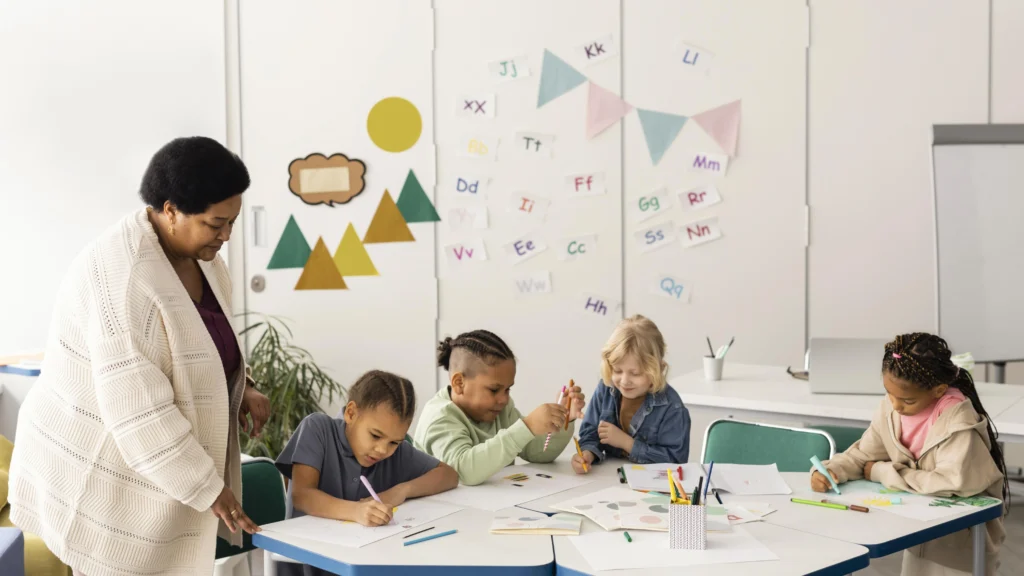
Montessori schools thrive when classroom practice, administrative systems, and leadership structures align. Teachers can focus more fully on children when administrative noise is minimised. Families can make informed decisions when communication is clear. Administrators can plan effectively when data is organised and accessible. Montessori daycare software, school learning assessment tools, and student information management systems work together to create the coherence that strengthens entire school communities.
In early childhood Montessori programs, where families often begin their relationship with the school, administrative clarity is especially crucial. The early years lay the foundation for long-term retention. When families experience trust, respect, and stability from the very beginning, they are more likely to continue through the three-year cycle and beyond.
Why Montessori Daycare Software Matters
Montessori environments respect the developmental needs of toddlers and young children. Montessori daycare software must reflect the same respect for families and teachers.
Effective daycare software provides:
- Clear communication with parents
- Attendance tracking
- Daily summaries
- Health and safety documentation
- Incident reports
- Napping and feeding notes
- Photo and video updates
These features create transparency and trust. Parents want to know how their child spends their day, not in a way that replaces real connection, but in a way that supports it.
The Montessori early learning platform becomes an administratively prepared environment that allows teachers to focus on observation, personalisation, and creating meaningful work.
School Learning Assessment Aligned With Montessori Principles
Montessori assessment is not about grades or standardised tests. It is about observing developmental patterns, physical, emotional, cognitive, and social. School learning assessment tools must support teachers in:
- Recording observations
- Tracking sensitive periods
- Documenting lessons presented
- Identifying emerging skills
- Noting shifts in temperament or concentration
- Sharing developmental insights with families
- Supporting children with specific learning needs
Assessment is a form of observation, and observation is one of Montessori’s most essential practices.
When assessment tools align with Montessori principles, teachers can track each child’s learning journey without resorting to reductive metrics.
The Role of Student Information Management
Student information management systems provide the structure that supports accuracy, safety, and communication across the school. Strong systems allow administrators and teachers to access:
- Emergency contacts
- Health records
- Allergy and medication information
- Authorized pick-ups
- Developmental notes
- Schedules
- Attendance records
- Family communication preferences
When this information is accurate and accessible, teachers and administrators feel more confident responding to children’s needs. Student information management also plays a crucial role in school accreditation, compliance, and long-term planning.
Neuroscience, Montessori, and Administrative Clarity
Montessori’s insights about sensitive periods and hands-on learning remain central, but modern neuroscience deepens our understanding of why these practices work. Brain research confirms that:
- Movement supports cognition
- Sensorial exploration builds neural pathways
- Autonomy strengthens executive functioning
- Emotional safety supports memory and problem-solving
- Mixed-age community supports social development
Administrative clarity supports the adults who make this environment possible.
When teachers are not bogged down by paperwork or unclear processes, they can focus on children with more presence and joy. When families receive clear communication, they feel emotionally grounded and more willing to partner with the school.
Supporting Teachers Through Alignment
Montessori teachers, especially in early childhood, rely on administrative systems that support:
- Accurate rosters
- Up-to-date health information
- Clear staff communication
- Documentation tools that reduce redundancy
- Time for observation
- Ongoing professional development
- Support for children with diverse needs
- Dignified, equitable workplace practices
When Montessori daycare software, school learning assessment tools, and student information management systems are aligned, teachers have the information they need to prepare, observe, and guide. This alignment strengthens teacher retention, which strengthens child outcomes.
Equity and Inclusion in Early Childhood Programs
Families begin their Montessori journey in the toddler and Primary years. These first impressions matter deeply. Equity, cultural humility, and inclusion must be visible in:
- Communication practices
- Enrollment processes
- Classroom routines
- Family partnership
- Translated materials
- Support for parents new to Montessori
The Montessori early learning platform can support inclusion by offering accessible, multilingual communication and by helping administrators track family engagement and provide additional support where needed.
Equity is not peripheral. It is foundational.
Board–Head Alignment for Long-Term Stability
In non-profit Montessori schools, the Board plays a critical role in shaping early childhood program stability. Decisions on tuition, staffing, program expansion, and facilities must align with the Head of School’s understanding of developmental and community needs.
When the Board and Head of School are aligned:
- Tuition is set early
- Administrative systems can be prepared proactively
- Families can receive re-enrollment information on time
- Teachers have clarity about staffing and support
- Summer programs can be planned thoughtfully
- Communication becomes consistent and predictable
Montessori school solutions are most effective when governance and leadership decisions are made with coherence and foresight.
Using Technology to Strengthen Family Relationships
Parents of toddlers often feel the emotional weight of leaving their child in someone else’s care. Transparent communication helps ease this anxiety.
Montessori daycare software supports parent partnership by:
- Providing same-day updates
- Offering insights into routines
- Sharing photos or moments from the day
- Communicating developmental notes
- Alerting parents to changes in behaviour or health
- Reinforcing the classroom’s language and routines
This alignment between home and school strengthens trust from the very beginning of the family’s Montessori journey.
Summer Program Planning and Continuity
Summer programs for toddlers and Primary-age children offer continuity that supports emotional and developmental stability. Administrative systems can help schools:
- Share program details early
- Track enrollment
- Manage staffing
- Communicate routines
- Support smooth transitions
- Provide developmental summaries
Montessori school solutions that integrate student information management with summer planning reduce stress for families and staff alike.
Conclusion
Clever Education Solutions brings together Montessori daycare software, school learning assessment tools, and student information management systems to create alignment between classroom practice, administrative clarity, family partnership, and leadership vision.
When these systems reinforce one another, children experience stability, teachers feel supported, families feel connected, and administrators are able to plan with confidence.
Montessori school solutions should never replace the beauty of the prepared environment. They should strengthen it. When used well, they help schools embody Montessori values across every level of the organisation. Alignment isn’t just desirable… it is essential.