
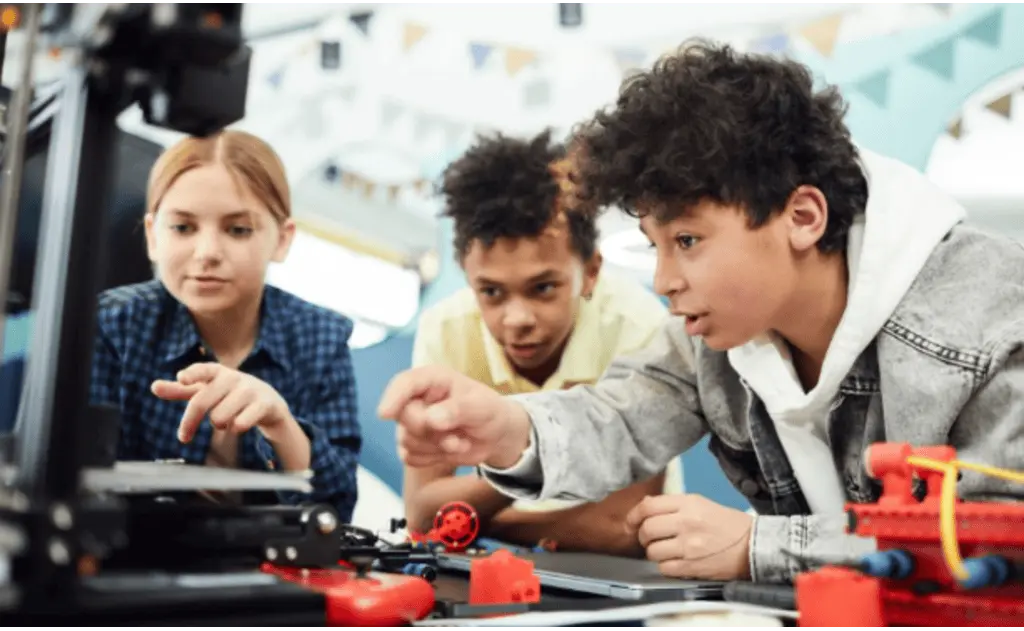
Montessori education is built on hands-on learning, independence, and respect for the child’s natural development. However, as digital tools become integral to 21st-century life, educators ask an essential question:
How can we thoughtfully integrate technology in Montessori classrooms while honoring the method’s core values?
The answer isn’t about replacing Montessori materials—it’s about enriching the prepared environment of children after six years of age with tools that extend learning, deepen curiosity, and connect students to the broader world.
Technology as a Tool for Exploration
Digital devices should never take the place of tactile Montessori materials. However, they can serve as a valuable extension of the child’s work. For example, students can use tablets to:
- Document science experiments with photos or voice memos
- Record themselves reading aloud to build fluency
- Create photo journals of classroom work for self-reflection
These activities support Montessori’s emphasis on observation, independence, and reflection—using technology as a mirror, not a distraction. Many teachers now use a Montessori lesson planning tool to document and connect this tech-assisted work with a child’s progress and personalized goals.
Digital Storytelling in Montessori Classrooms
Creativity and language development thrive when students can express themselves. With digital storytelling tools like Book Creator or StoryJumper, children can:
- Illustrate their own stories
- Record narration and text
- Share books with classmates or parents
Digital storytelling nurtures writing skills, sequencing, and oral language—and offers a beautiful complement to Montessori’s work with movable alphabets and early writing materials. A Montessori lesson planning tool helps educators track storytelling progress and integrate literacy goals into daily lessons.
Interactive Learning Platforms and Virtual Reality in Education
Montessori classrooms prioritize sensorial, hands-on materials, but some digital platforms can gently reinforce those concepts. Personalized learning programs in math or language can adapt to each child’s pace and offer instant feedback.
Even more transformative? Virtual reality (VR). Though still emerging in education, VR offers experiential learning opportunities that were once unimaginable. Imagine guiding your class on a virtual journey to Machu Picchu, standing amidst the red rock formations of Monument Valley from an urban classroom on the East Coast, or strolling through the galleries of the Musée d’Orsay to admire the brushstrokes of Impressionist masters. These immersive experiences open windows to the world, making global culture and history accessible to every child, no matter where they are.
From exploring coral reefs to visiting ancient architecture, VR allows children from all backgrounds to engage with the global classroom, especially impactful for schools in rural or underserved areas.
This experience can be even more powerful when paired with student information management tools that allow teachers to log interests, engagement levels, and curriculum touchpoints that connect with real-world content.
Global Connection and Cultural Awareness
One of Montessori’s hallmarks is a deep respect for cultural diversity and peace education. Digital tools can connect students with peers across the globe for virtual pen pal projects, language exchanges, or collaborative art.
With supervision and structure, these experiences promote empathy, broaden perspectives, and support Montessori’s commitment to global citizenship.
Supporting Montessori Grammar Lessons with Digital Tools
Montessori grammar materials—like the grammar symbols and sentence analysis charts—remain foundational. However, digital technology can help educators expand and customize these resources.
Using digital tools, teachers can:
- Generate new grammar box examples tailored to student interests
- Create themed sentence analysis sets inspired by class projects
- Modify materials quickly to include culturally relevant content
Modern student information management platforms can also help track grammar progress and suggest targeted activities based on observed needs. Pairing this with a Montessori lesson planning tool creates a dynamic learning experience customized to each child’s pace and passions.
Conclusion: Purposeful Integration, Aligned with Montessori Values
Integrating technology in Montessori classrooms isn’t about screen time—it’s about supporting relevant, personalized, and developmentally appropriate learning. When used with intention, technology can:
- Extend the learning environment
- Support educators with adaptable tools
- Deepen children’s cultural awareness
- Make invisible learning visible through documentation
- Expand access to knowledge for all learners
When aligned with Montessori values, technology becomes a tool for connection, not distraction. In the hands of a thoughtful educator, it can enrich the child’s experience while preserving the wonder of Montessori education.
Learn more about how Cordelia simplifies Montessori school management through centralized tools for enrollment, billing, and communication.