
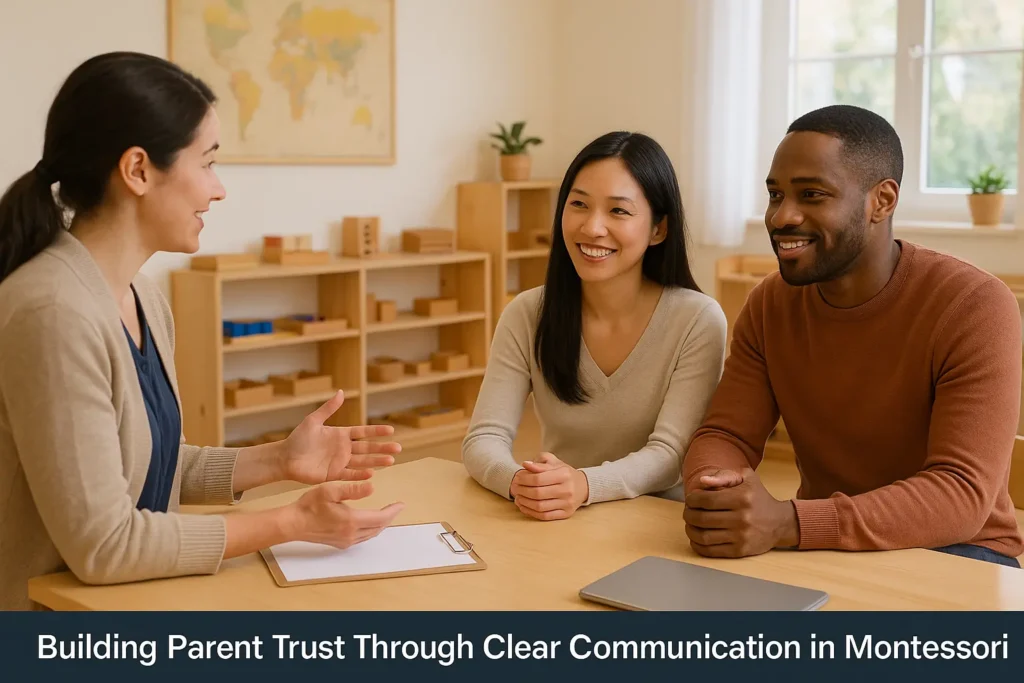
Trust is the foundation of any school community. Parents entrust their children to teachers each day, believing they will be safe, cared for, and guided toward growth. For Montessori schools solutions, this trust is crucial because the method may be unfamiliar to many families. Clear, consistent communication is one of the most potent ways to build that trust, reduce parent stress, and create a strong partnership between home and school.
Why Communication Builds Trust
From a psychological perspective, transparency fosters a sense of security. When parents know what is happening in the classroom and understand the reasoning behind Montessori practices, they are more likely to feel confident in the school. Research on family–school partnerships shows that when communication is regular and respectful, parents are more engaged, and children benefit from stronger consistency between home and school environments.
Montessori philosophy also emphasizes the importance of the prepared environment—not only for the child, but for the adults. When communication channels are scattered or unclear, parents experience confusion and frustration, which can erode trust. By contrast, a clear and unified approach strengthens the entire community.
The Challenges of Parent Communication Today
Modern families face busy schedules and often juggle multiple digital platforms. Important messages get lost in crowded inboxes, forms are forgotten, and schedules feel overwhelming. For Montessori teachers, this often translates into repeated reminders, reactive conversations, or conflicts that could have been avoided. Without strong communication systems, teachers end up carrying the extra emotional and administrative load, which contributes to stress and burnout.
Practical Strategies for Building Trust Through Communication
- Centralize Communication. Use systems like Cordelia school management software from Clever Education Solutions to give parents a single hub for calendars, forms, and updates.
- Explain the “Why.” Montessori practices—like mixed-age classrooms or delayed direct instruction—make sense when explained. Proactive education helps parents trust the process.
- Be Consistent. Establish clear norms about when and how families receive updates. Consistency reduces anxiety and helps parents know where to look for information.
- Offer Two-Way Channels. Trust grows when communication is not one-sided. Provide opportunities for parents to ask questions and share concerns in structured ways.
- Respect Teacher Boundaries. Administrators can shield teachers from communication overload by setting expectations and ensuring families know who to contact for specific needs.
A Collective Benefit
When Montessori administrators invest in effective communication systems, they not only build parent trust but also protect teacher energy and improve the school’s overall climate. Parents feel informed and supported, teachers are free to focus on children, and the whole community thrives. With tools like Cordelia from Clever Education Solutions, schools can move from scattered messages to clear, reliable communication that strengthens relationships and builds lasting trust.