
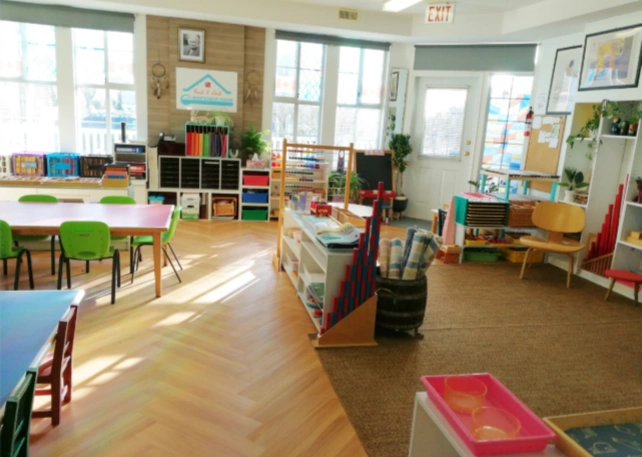
There is the official curriculum of a school: the lessons, the materials, the scope and sequence, the carefully prepared experiences we intentionally place before children, and the Montessori school management software that supports the environment around them.
And then there is the invisible curriculum. The one communicated not through lesson plans, but through atmosphere.
Through timing, tone, systems, and the emotional climate adults create around children every day.
Children learn from how adults speak to one another in the hallway.
Families learn from the clarity, or confusion, of school communication.
Staff absorb what the organisation truly values through how meetings are run, decisions are made, and stress is handled when things become difficult.
At the end of the school year, this invisible curriculum becomes especially visible. Because June in schools is rarely calm.
It is a season filled with transitions: graduations, performances, conferences, classroom moves, staffing decisions, final reports, budget conversations, celebrations, goodbyes, and the emotional weight of an entire year coming to a close.
Under pressure, systems reveal themselves.
Not the systems written in handbooks or strategic plans, but the operational habits that shape daily life inside a school community.
Does communication become rushed? Do adults become reactive? Does important information live inside people’s heads rather than in reliable systems? Do families experience steadiness or confusion? Do teachers feel supported or abandoned under the weight of a thousand final tasks?
We know children absorb information from their environment. They may not understand enrollment projections, staffing shortages, or budget concerns, but they feel the emotional atmosphere around them with extraordinary precision. Maria Montessori understood this deeply. The child absorbs the environment entirely, not only the physical environment, but the emotional and relational one as well.
A school can speak endlessly about respect, calm, and community while unintentionally communicating urgency, fragmentation, and exhaustion through the way adults operate together.
This is why Montessori school management software systems matter.
Not because schools should become corporate.Not because efficiency is the ultimate goal. And certainly not because Montessori education should become rigid or transactional.
Healthy systems exist to protect human relationships.
When communication is clear, adults spend less energy tracking information mentally. When responsibilities are visible, fewer things fall onto the shoulders of the same people. When processes are thoughtful, schools rely less on heroics and more on sustainability. When expectations are consistent, trust grows quietly in the background.
In Montessori education, we often speak about the prepared environment for children. But adults need prepared environments too.
Teachers, Montessori school administrators, assistants, and families function best when the organizational environment supports clarity, dignity, and steadiness. In many schools, however, adults are expected to operate inside systems held together by memory, urgency, and goodwill alone.
For a while, this can even appear to work.
Schools are filled with deeply committed people. They compensate constantly: remembering things for one another, carrying invisible emotional labour, staying late, bridging communication gaps, softening operational confusion before it reaches families or children.
But over time, invisible labor becomes exhausting. And eventually exhaustion becomes culture.
One of the quiet dangers in schools is that dysfunction often hides inside dedication. Communities become so accustomed to heroic effort that they stop recognising the underlying systems that create the strain in the first place.
The end of the school year offers a rare opportunity to see all of this clearly.
Where were the bottlenecks? What created unnecessary stress? What depended too heavily on one person? Which processes supported people well? Where did communication break down? What helped the community remain grounded even during busy periods?
These are not merely operational questions. They are cultural questions.
Every process teaches something:
- A chaotic dismissal process teaches something.
- A thoughtful onboarding process teaches something.
- A rushed staff meeting teaches something.
- A calm and organized re-enrollment season teaches something, too.
Children are not the only learners inside a school community.
Adults are constantly learning what the organization truly values through the systems they experience every day.
At the end of the year, schools often focus on celebration, and celebration matters deeply. But reflection matters too. Not reflection rooted in blame or perfectionism, but in observation.
Montessori education begins with observation. Healthy leadership does too.
June is an invitation to observe the invisible curriculum operating inside the adult environment: the rhythms, the assumptions, the communication patterns, the pressure points, the habits that either support people or quietly deplete them.
Because schools do not only teach through the curriculum, they teach through how the adults live and work together.
And in the long run, that invisible curriculum may shape the culture of a school more powerfully than anything written on paper. At Clever Education Solutions, we believe that observing and strengthening these invisible systems is one of the most meaningful ways schools can create environments where children, families, and educators thrive together.