
Because most orientations explain what the school believes.
Far fewer explain how the school operates.
Montessori schools are generally thoughtful about philosophical preparation, and rightly so. The philosophy is why we are all here. But a new guide’s first weeks are rarely spent discussing cosmic education or observation. They are spent taking attendance, locating records, contacting parents, understanding schedules, and figuring out who knows what as they learn the school’s montessori school operations software and daily operational routines.
Montessori already gives us the language for understanding this.
We would never ask a child to work in an environment where nothing has a place and every task requires asking an adult for help. We recognize that immediately as an unprepared environment because we know what it produces: dependence, frustration, and uncertainty.
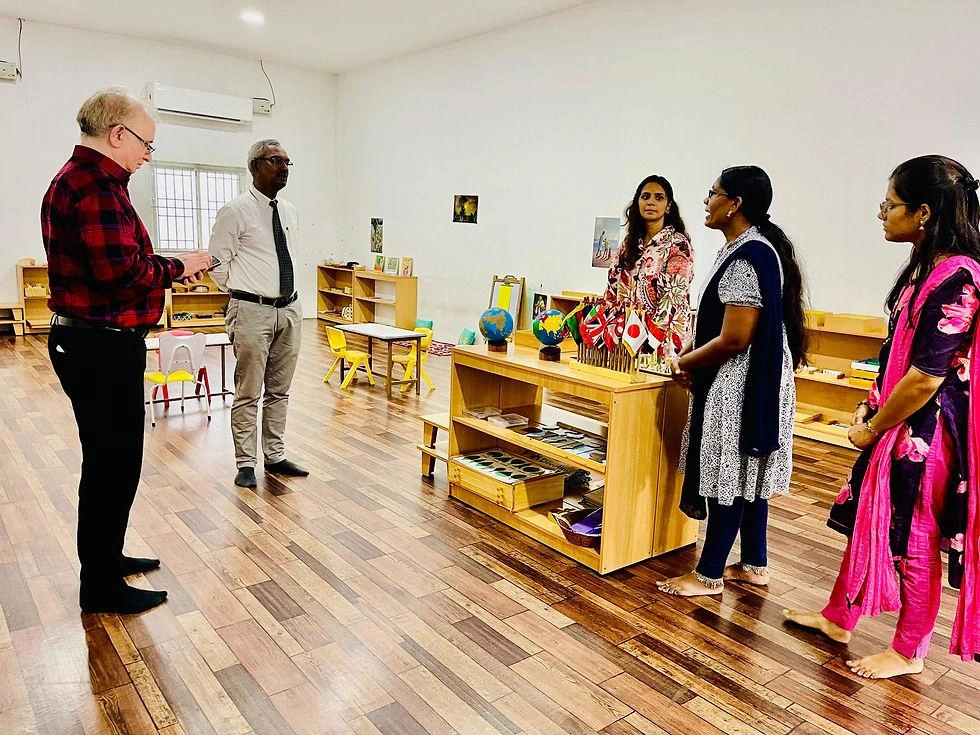
A new staff member trying to navigate undocumented systems is working in an unprepared environment.
The preparation of the adult environment is leadership work.
Late July is when that work begins.
Preparing the Adult Environment
Most of the questions new staff ask during the first weeks of school fall into five predictable areas. Preparing these systems before opening day dramatically reduces interruptions and builds confidence from the very beginning. For Montessori school administrators, investing time in documenting these workflows creates a more prepared environment and allows new staff to become independent much faster.
1. Daily Records
Attendance. Incident reports. Health logs.
Where does each one live? When must it be completed? Who reviews it? If licensing walked into the building tomorrow morning, could your newest teacher confidently produce what is required?
Clarity builds confidence.
2. Parent Communication
Which messages come directly from classroom guides? Which belong to the office? Which communication channels does the school use consistently—and which ones should not be used?
Every school has these expectations.
Far fewer have written them down.
3. Who Owns What
Every experienced staff member carries an invisible map of the school.
Who answers billing questions?
Who manages admissions?
Who handles maintenance requests?
Who approves purchases?
New staff cannot see that map unless someone draws it for them.
4. The Rhythm of the Year
Calendars are about more than holidays.
They tell the story of the school year.
When are conferences?
When does re-enrollment begin?
When are progress reports due?
What weeks should remain protected for observation and normalization?
A guide who can see the year ahead makes better decisions in September.
5. Emergencies and Exceptions
Early dismissals.
Custody arrangements.
Medical concerns.
Emergency procedures.
These are the questions that cannot wait for an answer.
Their answers should never depend on finding the right person in the hallway.
Three Ways Schools Teach Their Systems
Whether intentionally or not, most schools rely on one of three approaches.
| Approach | How It Works | Hidden Cost | Who Carries the Cost |
| Learning by interruption | New staff ask questions as situations arise. | Hundreds of interruptions, inconsistent answers, and growing frustration. | Experienced staff and the office. |
| Learning through one mentor | A veteran answers every question. | Better consistency, but knowledge remains personal and disappears when the mentor leaves. | The mentor—and eventually the school. |
| Prepared adult environment | Systems are documented, demonstrated, and stored in one predictable place before school begins. | A few days of thoughtful preparation in July. | Leadership, once. |
The third approach is not primarily about technology, although having one place for information certainly helps.
It is about intention.
The question is simply this:
Are new staff walking into an environment that has been prepared for them—or are they expected to prepare it themselves?
Practical Ways to Prepare Your Systems Handover
- Create a one-page operations map. Show who owns what and where people go for common questions. One page often eliminates dozens of interruptions.
- Ask last year’s newest hire to review it. They still remember what felt confusing. Your veterans usually cannot—they have carried the map in their heads for years.
- Demonstrate, don’t just explain. Let new staff record attendance, complete a form, and send a parent message before children arrive. Ten minutes of doing often teaches more than an hour of talking.
- Give every recurring question a permanent home. If the same question is asked twice, its answer belongs in a document rather than another hallway conversation.
- Protect one hour during in-service week for systems. Philosophy deserves its days. Operations deserves one intentional hour.
- Revisit the conversation six weeks later. By then, new staff know exactly what the onboarding missed. Ask them—and improve next year’s preparation.
Frequently Asked Questions
When should systems onboarding happen?
The documentation should be ready by late July. The walkthrough belongs during in-service week—close enough to opening day that the information is fresh, early enough that no one feels rushed.
How is this different from a staff handbook?
A handbook explains policies.
Systems onboarding teaches workflows.
“Attendance must be recorded by 9:00 a.m.” is a policy.
Showing a new guide exactly where and how to record attendance is onboarding.
Schools need both.
Only one prevents the doorway questions.
Who should lead systems onboarding?
The people who know the systems best—often the office administrator or business manager. The Head of School establishes that operational preparation matters. The people closest to the work usually teach it most effectively.
What about returning staff?
Whenever systems change, everyone benefits from a refresher. Returning staff who missed an update often become confident sources of last year’s answers, which can be harder to correct than simply starting together.
Does this require new software?
No.
A well-organized binder can absolutely be a prepared environment.
What preparation often reveals, however, is how many different places information lives—and how much unnecessary searching that creates.
Conclusion
One of Montessori’s greatest lessons is that independence is never the absence of support.
It is the result of an environment prepared so thoughtfully that support has been built into the surroundings.
Our newest colleagues deserve the same gift.
A guide who knows where things live, who understands who owns what, and who can anticipate the rhythm of the school year is free to focus on what matters most: the children.
That confidence is not a personality trait.
It is not simply experience.
It is the product of thoughtful leadership.
This is what I mean when I talk about the prepared environment for adults.
It is also the philosophy behind everything we build at Clever Education Solutions. Whether schools use a binder, shared documents, or a platform like Cordelia, the goal is the same: to create an environment where people spend less time searching for information and more time supporting children and families.
Because August will ask a great deal of your newest colleagues.
July is when you decide whether they will spend their energy learning children or learning your systems.