
By February, teams begin to reveal their true structure.
In September, enthusiasm carries people. In October and November, goodwill smooths rough edges. But by midyear, personality is no longer enough. Shared clarity not shared enthusiasm sustains a team at this stage.
Strong teams are not accidental. They are designed, maintained, and protected through systems, including all in one school management software, that support dignity, honest talk, and consistent follow-through.
The Myth of “We’re Like a Family”
Many schools take pride in being “like a family.” The sentiment is generous. It reflects warmth and commitment. But without clarity, that language can also obscure responsibility.
Families function through emotional bonds. Organizations function through defined roles and reliable processes. When expectations remain unspoken, or boundaries blur, the most conscientious team members often carry more than their share. Over time, this imbalance does not build closeness; it builds quiet resentment.
Clarity is not cold. It is respectful. It protects relationships by reducing guesswork.
Dignity Lives in Role Clarity
At Clever Education Solutions, we often speak about dignity as an operational practice. In team dynamics, clearly defined roles reveal dignity most clearly.
When adults know what they are responsible for and what they are not, supported by clear systems and school management software, they can work with confidence. When leaders fail to acknowledge shifting expectations or to clearly state responsibilities, they increase stress and erode trust.
Ambiguity has a cost. It demands constant interpretation, encourages assumptions, and generates friction where none should exist.
Role clarity does not eliminate collaboration. It makes collaboration cleaner. Adults can step in to support one another from a place of choice rather than obligation.
A Prepared Environment for Adults
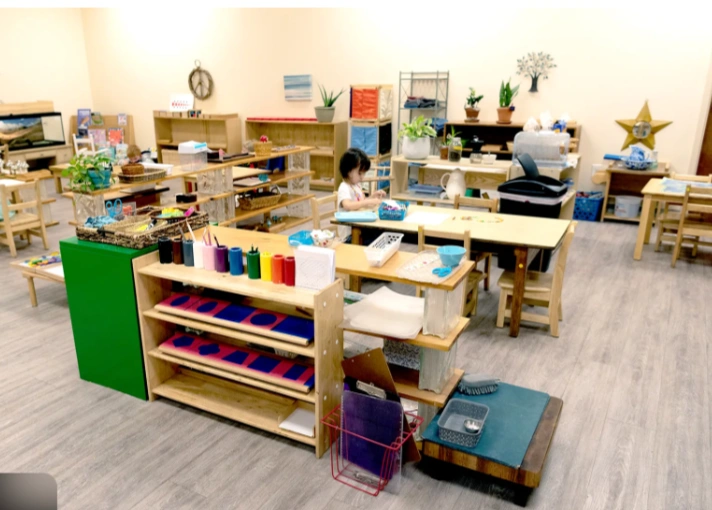
Montessori educators understand that children cannot normalize in a chaotic environment. Order, clarity, and intentional design protect concentration and support independence. The prepared environment is not decorative; it is structural.
The same principle applies to adults.
When communication channels are unclear, and no structured school communication platform exists, when decision-making authority shifts without transparency, or when responsibilities overlap without coordination, adults experience cognitive noise.
Leaders are responsible for preparing the adult environment with the same intentionality as Montessori guides prepare their classrooms. Clear roles, visible processes, and predictable follow-through form the adult equivalent of ordered shelves and defined work cycles. Without that preparation, even the most committed team will struggle to function at its best.
Trust Is Built Through Follow-Through
Trust does not grow from vision statements. It grows from consistency.
A team fractures when leaders revisit decisions without explanation, end conversations unresolved, or let agreed-upon next steps quietly dissolve.The issue is rarely disagreement itself. It is the absence of reliable follow-through.
When leaders close loops, document decisions, and communicate updates clearly, they reduce uncertainty. That reduction of uncertainty is calming. It signals that the system is steady even when circumstances are complex.
Trust deepens not because everything is perfect, but because people know what to expect.
Honest Talk Prevents Drift
Every team experiences tension. The difference between a healthy team and a fractured one is not the absence of difficulty; it is the willingness to address it.
Honest talk is often avoided in schools because leaders fear creating discomfort. Yet discomfort that is addressed respectfully tends to pass. Discomfort that is avoided tends to grow.
Honest talk requires clarity of observation and steadiness of tone. It is grounded in a shared purpose, not personal criticism. This may involve acknowledging that a process is not serving the team well or pointing out misaligned role expectations. It encourages dialogue rather than defensiveness.
When tension is addressed early, it strengthens the team’s resilience. When it is ignored, it quietly reshapes the culture.
Streamlined Systems Reduce Emotional Friction
Many interpersonal conflicts are, in fact, structural issues.
When communication channels are unclear and no school communication platform is used, when meetings lack purpose, and when responsibilities overlap without coordination, friction naturally increases. Adults begin to compensate for systemic gaps. Over time, those compensations feel personal.
Streamlining does not remove complexity from school life, but it removes unnecessary layers. Clear agendas, defined ownership of tasks, visible timelines, and simplified communication structures reduce the cognitive load on everyone. When systems are clean, relationships have room to breathe.
In Lean thinking, we often speak about eliminating waste. In human terms, that waste is frequently confusing. Removing it is an act of care.
Teams Reflect the Systems They Work Within
Just as children internalize the prepared environment, adults internalize the systems around them. Working within clear structures, a team learns to value clarity. A team that experiences consistent follow-through learns that commitments matter. By practicing honest talk, a team learns to address tension without fear.
Conversely, when ambiguity is normalized, when loops remain open, or when difficult conversations are postponed indefinitely, those patterns become part of the culture.
Strong teams are not defined by harmony. They are defined by steadiness. They function because the systems around them protect dignity and reduce unnecessary friction.
February offers a natural pause. Not to overhaul everything, but to observe. Where does ambiguity create strain? In which areas does follow-through need strengthening? How might a single clarified process restore steadiness?
Strong Teams Through Clear Systems
Supporting teachers and building strong teams are not separate goals. At Clever Education Solutions, when roles are clear, conversations are honest, and systems are streamlined, adults experience stability. And stable adults create stable environments for children.
Strong teams do not happen by accident. They are the result of deliberate leadership—quiet, consistent, and grounded in respect.