
A school tour teaches families far more than the guide says. Prospective parents notice how they are greeted, how adults speak to each other, how the building is cared for, and how their questions are answered. This is the school’s invisible curriculum. Preparing it with the same care as a classroom is the most effective way to improve a tour.
By November, tour season has begun. Open houses are on the calendar. Inquiry forms arrive each week. Families who will apply in January are visiting now.
Most schools prepare their tours carefully. They choose which classrooms to visit, which points to make about Montessori, and which questions to expect.
And yet families often leave remembering something else entirely. The way the receptionist looked up. A conversation overheard in the hallway. A child who showed them where to hang their coat. A question that no one could answer.
Families are not only listening to the tour. They are reading the school.
What they read is a curriculum the school teaches every day, whether or not anyone planned it.
What is a school’s invisible curriculum?
In Montessori, we understand that children learn from the environment as much as from the lesson. A shelf in order teaches care. A guide who waits teaches patience. A child learns what is valued by watching what the adults actually do.
The same is true of a school as a whole. Beyond the classroom, every school teaches through its routines, its systems, and the way its adults treat one another. How a phone call is answered. How a mistake is handled. Whether a question gets followed up or forgotten. This is the invisible curriculum: everything a school teaches without meaning to.
Families on a tour are learning this curriculum quickly. They have perhaps an hour, and they are trying to answer a question no brochure can settle:
Will my child be known here? Will we be?
The invisible curriculum is not a problem to hide. It is often the most honest thing a school can show. The work is to make sure it says what you mean it to say.
My very first school was located in the basement of an old Jewish temple. The building had seen better days, so when I gave tours, my plan was to get parents into the classroom as quickly as possible.
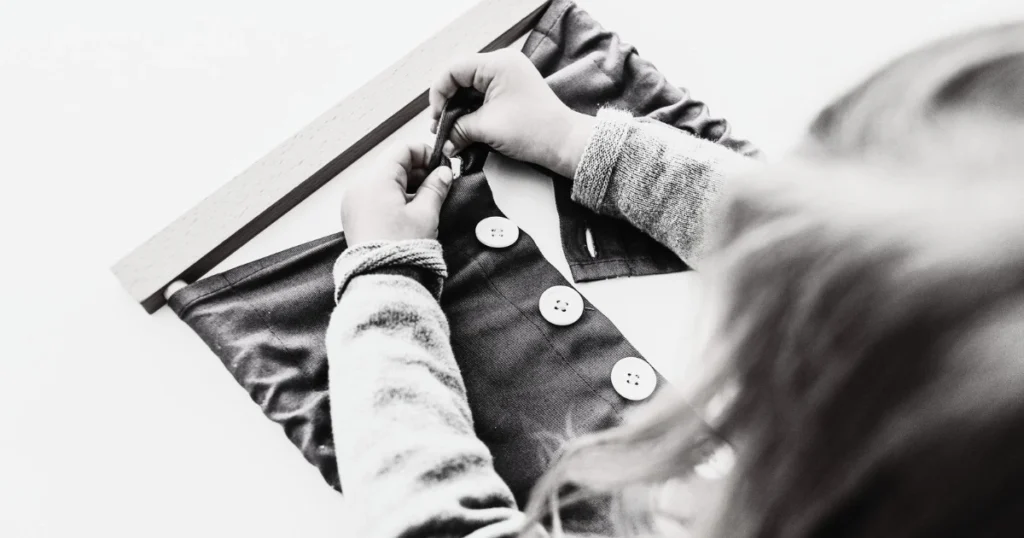
One morning, I welcomed a family at the door and led them up the three steps to the classroom. Before I could finish my sentence, a three-year-old boy rushed over to me. He had just finished the zipper frame by himself for the first time, and he was exuberant. I got down to his level and congratulated him.
I had not planned that interruption, and I lost my place in my prepared explanation. But the parents were deeply touched by the little boy’s pride in his work. They told me later it was a big factor in their decision to enroll their son.
They did not remember the building. They remembered how an adult stopped to honor a child’s work.
What do families notice on a tour?
Consider a family arriving for a 9:30 tour.
The parking lot is full of staff cars, and there is no sign for visitors. At the front door, they wait while someone finishes a phone call. The person greeting them is warm but does not know they were coming. In the hallway, two adults are discussing a scheduling problem in tired voices. The tour guide is ten minutes late from a meeting and apologizes twice.
Inside the classroom, everything is beautiful. A four-year-old is polishing a brass bowl with complete concentration. The guide explains normalization and the three-year cycle well.
The family leaves impressed by the classroom. But on the drive home, they talk about the wait at the door and the tired voices in the hallway. They wonder whether the school is stretched thin.
Nothing in that tour was wrong. But the school taught two lessons, and only one was planned.
Now consider the same morning prepared differently. A reserved parking space has the family’s name on it. The front desk greets them by name. The guide is waiting. A teacher in the hallway smiles and says, “Welcome, we’re glad you’re here.” The scheduling conversation happens later, behind a closed door.
The classroom is the same. The difference is everything around it.
| What the school plans to show | What families also notice |
| A beautiful, well-prepared classroom | Whether the front entrance, hallways and restrooms receive the same care |
| An explanation of Montessori philosophy | Whether adults speak to each other with the respect they describe for children |
| Independent, concentrated children | Whether the adults look calm or rushed |
| A clear admissions process | Whether anyone remembers their name, their child’s age, or the question they asked by email |
| A warm community | How a staff member they did not meet treats them in passing |
| Answers to their questions | Whether “I don’t know” is followed by an answer the next day |
None of this requires a perfect school. It requires a school that knows it is being read.
How do you prepare a tour the way you prepare a classroom?
A Montessori guide prepares the environment by looking at it from the child’s height. Preparing a tour begins the same way: walk it as a visitor.
Walk the route yourself. Arrive at the parking lot at tour time. Find the entrance. Wait at the front desk. Walk the hallways and step into the restroom a family might use. Notice what you have stopped seeing because you see it every day: the stack of boxes in the corridor, the outdated flyer on the bulletin board, the door that sticks.
Choose the timing with care. A classroom at 9:30 in the morning, during the work period, shows something a classroom at 11:45 cannot. Avoid transitions, lunch, and the last half hour of the day unless you want families to see them.
Let families observe before you explain. Give them a few quiet minutes in a classroom before you say anything. Ask them afterward what they noticed. Their answer tells you what matters to them, and your explanation will land on something they have seen.
Prepare the adults, not only the rooms. Let staff know when tours are scheduled. A teacher who knows visitors are coming can greet them in a sentence, without interrupting the work. A front desk that has the family’s name and child’s age ready shows that the school pays attention.
Show something real, not something staged. A tour that looks rehearsed makes families wonder what is being hidden. A simple, honest answer to a hard question builds more trust than a polished one.
Who should give the tour, and what should every adult know?
The person who gives the tour matters less than how well prepared they are. A head of school, an admissions director, or an experienced teacher can all give an excellent tour. A rushed or uncertain one, by anyone, teaches families that the school is rushed or uncertain.
Whoever leads it should be able to answer the questions families actually ask, not only the ones about philosophy. How does the school support a child who is struggling to read? What happens when two children have a conflict? What does a typical day look like for a three-year-old who still naps? How much will tuition increase next year?
When the answer is “I don’t know,” say so, and say when you will follow up. Then follow up.
Every adult in the building is part of the tour, whether or not they know it. A short staff conversation before tour season helps:
- When are tours scheduled this month?
- How do we greet visitors in the hallway or classroom?
- Which conversations belong behind a closed door during tour hours?
- Whom should a family be directed to if they ask a question?
During a tour, the goal is for the school to be what it is on its best ordinary day.
What happens after the tour?
The invisible curriculum does not end at the front door. For many families, the most telling part of the tour comes afterward.
Did anyone follow up? Was the question they asked answered? When they called with a second question, did the person on the phone know they had visited? Did they receive three different emails from three different people, or none at all?
A family who had a lovely tour and then heard nothing for two weeks learns something about how the school handles details. A family who receives a short, personal note the next day, with an answer to the question they asked, learns something too.
Follow-up does not need to be elaborate. It needs to be reliable:
- A thank-you within a day or two, from the person who gave the tour.
- An answer to any question left open, by the date promised.
- Clear next steps: how to observe again, how to apply, and the deadline.
- One person the family knows to contact.
This is where many schools lose families they never knew they had. Not because the tour went badly, but because the follow-up depended on someone remembering, during the busiest weeks of the year.
Frequently asked questions
How long should a Montessori school tour last?
Long enough for families to observe a classroom quietly and ask their questions, usually 45 minutes to an hour. A shorter tour with time to observe often teaches more than a longer one filled with explanation.
When is the best time of day for a tour?
During the morning work period, when children are concentrated and the classroom is at its most characteristic. Avoid transitions, lunch, and dismissal.
Who should give admissions tours?
Anyone who knows the school well, can answer practical questions honestly, and has time to give the tour without rushing. Preparation matters more than title.
The tour is already happening
Every day, the school is teaching. The tour only gathers a few visitors to watch.
Before your next open house, walk the route as a visitor would. Ask your team what a family would learn from your entrance, your hallways, and your follow-up. Then prepare those things with the same care you give a classroom.
Families may not remember everything you explained. They will remember how the school made them feel, and whether it kept its word.
Clever Education Solutions builds Cordelia, Montessori school management software designed by Montessori educators for the way Montessori schools actually work, including the inquiries, tours, and follow-up that admissions season depends on.