
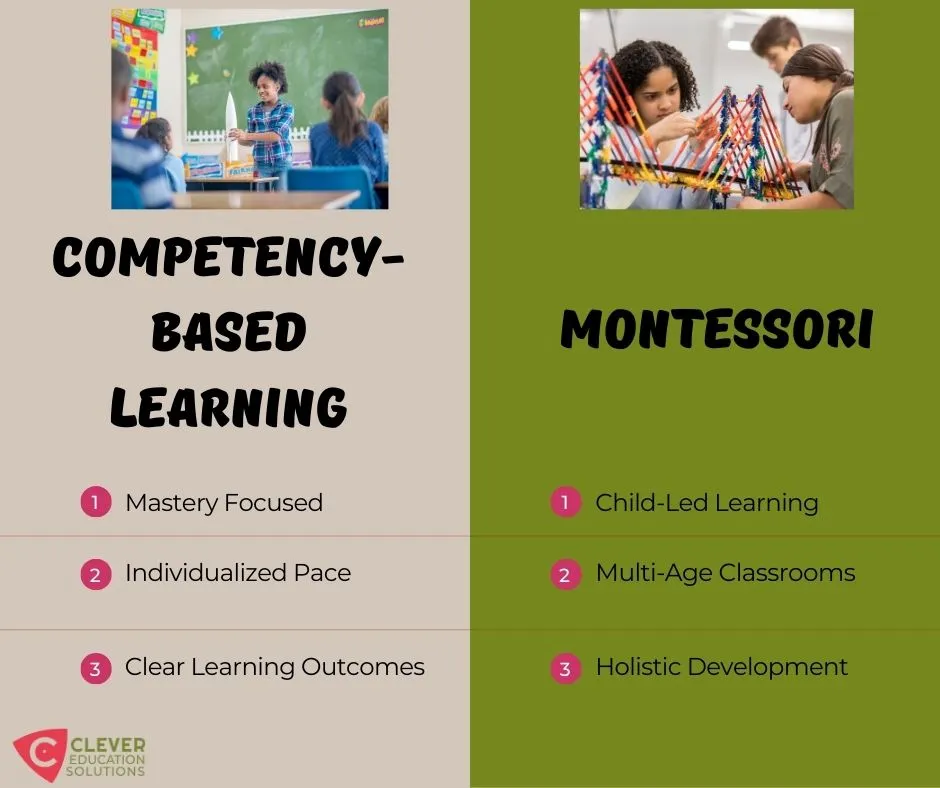
In the ever-evolving landscape of education, two models that have gained significant attention for their student-centered approach are Competency-Based Learning (CBL) and Montessori education. Both frameworks prioritize personalized learning management platforms, but they do so in unique ways, focusing on different aspects of student growth and achievement. Understanding their key differences and similarities can provide valuable insights for educators, administrators, and parents seeking the best fit for their students.
What is Competency-Based Learning?
Competency-Based Learning (CBL) is an educational model that shifts the focus from traditional time-based measures (like grades or age) to mastery of skills and knowledge. In a CBL system, students advance at their own pace, only moving forward when they demonstrate full competency in a given subject. This approach is designed to meet the diverse learning needs of students, giving them more control over their educational journey. CBL emphasizes measurable outcomes and practical applications, aligning learning with specific skill sets required for future careers or higher education.
Key Features of Competency-Based Learning:
- Mastery Focused: Progress is based on mastery of competencies rather than time spent in a class.
- Individualized Pace: Students can progress as fast or slow as needed, depending on their understanding.
- Clear Learning Outcomes: Learning goals are predefined and transparent to ensure students know what they are working toward.
- Flexibility in Learning: A wide range of learning experiences can be utilized, including project-based work, internships, or independent study.
What is Montessori Education?
Montessori education is a child-centered educational approach developed by Dr. Maria Montessori in the early 1900s. It emphasizes independence, hands-on learning, and self-directed activity. While Montessori education is often associated with early childhood education, at the elementary level, it offers a broad curriculum that covers math, language, science, geography, and history, with a continued emphasis on following the students’ interests. In this stage, Montessori education focuses on helping students make connections between subjects while nurturing their academic and personal development.
Key Features of Montessori Education:
- Child-Led Learning: Students choose their activities from a prepared environment, encouraging self-direction and responsibility.
- Mixed-Age Classrooms: Students of different ages learn together, promoting collaboration and peer learning.
- Emphasis on Hands-On Learning: Materials are tactile and designed for active engagement, allowing children to learn Montessori Education.
- Holistic Development: The focus is on the whole child, nurturing their social, emotional, and cognitive growth. Academic learning and personal development are intertwined.
Key Differences Between Competency-Based Learning and Montessori Education
- Learning Goals and Structure:
- CBL: Students progress by achieving clearly defined competencies. The system is often tied to measurable, academic benchmarks.
- Montessori (Elementary Level): While students follow their interests, they are also guided through a broad curriculum that includes core subjects like math, science, and history. The approach encourages students to explore these areas at their own pace, blending structured content with self-direction, similar to CBL.
- Role of the Teacher:
- CBL: Teachers act as assessors and facilitators, helping students understand what competencies they need to achieve and guiding them toward mastery.
- Montessori: Teachers are more like guides, observing students and offering gentle guidance as children explore their interests and work independently. At the elementary level, teachers introduce broader subjects and help students make interdisciplinary connections, similar to how CBL facilitates the mastery of interconnected competencies.
- Assessment:
- CBL: Assessment is frequent and formal, with students needing to demonstrate proficiency in specific skills before moving on.
- Montessori (Elementary Level): School learning assessment is ongoing but informal. Teachers assess students through observation rather than formal tests, focusing on personal and academic development rather than standardized benchmarks.
- Pacing:
- CBL: Students progress through a set curriculum at their own pace, based on their ability to master content.
- Montessori (Elementary Level): Pacing is individualized, but it’s guided by both student interest and the breadth of curriculum topics. Students explore academic subjects while still moving at their own speed, making Montessori elementary education align closely with CBL in terms of individualized learning.
- Environment:
- CBL: The environment is often flexible, incorporating digital learning platforms, real-world projects, or collaborative group work, but it is typically structured around specific competencies.
- Montessori: The environment is carefully prepared with specific materials designed to promote independence and exploration. It is intentionally simple and organized, allowing children to focus on their tasks.
Similarities Between Competency-Based Learning and Montessori Education
- Personalized Learning: Both models respect the individuality of students, allowing them to progress according to their own pace and needs.
- Student-Centered Approach: CBL and Montessori school CRM emphasize student agency, where students are active participants in their learning process rather than passive recipients of information.
- Focus on Skills: While the goals differ, both models aim to equip students with valuable skills—whether these are academic competencies in CBL or practical life skills and independence in Montessori.
- Encouragement of Independence: Both systems encourage students to take ownership of their learning, fostering independence and self-motivation.
In Conclusion
As an ardent Montessorian, I am glad Competency-Based Learning is gaining traction in traditional education. CBL’s focus on personalized progress and mastery aligns with many principles Montessori educators have long championed. However, Montessori education is much more than a methodology. It involves supporting the whole child—academically, socially, and emotionally—while helping each student discover their unique gifts. This holistic approach ensures that students gain knowledge and develop a deep understanding of themselves and the world around them. Both models offer innovative pathways to meet the diverse needs of today’s students. As education continues to evolve, the blending of these approaches could potentially lead to even more effective models that balance the holistic development of students with the mastery of critical competencies. Visit us for more information.